A4900-Vibrio
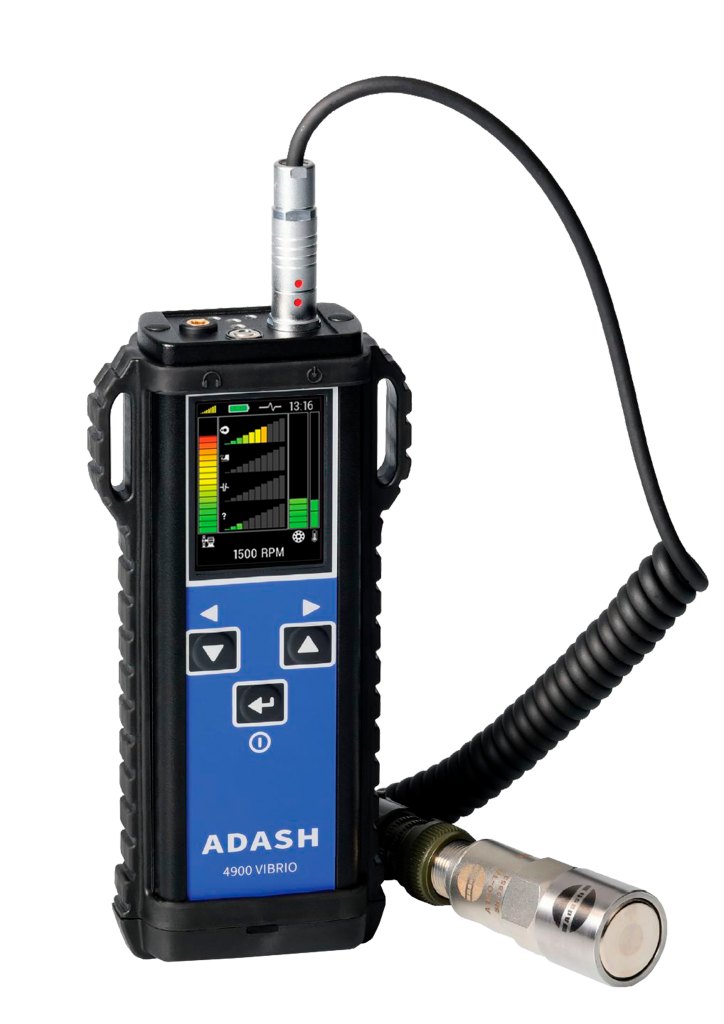
The path to Condition Based Maintenance starts here with a handheld vibration meter to predict and find machine faults.
The expert system assists with automatic fault detection, and the equipment is plug and play with no settings required – KEEP IT SIMPLE.


A4900 – Vibration meter
Are you getting started with Condition Based Maintenance? - Do you want to plan maintenance instead of running time-based maintenance?
Then the A4900 vibration meter for measuring bearing wear is the perfect choice. With an A4900 vibration meter, you'll be able to keep an eye on the condition of a machine.
We have programmed the settings, so all you have to do is follow the instructions on the screen and start measuring, so you don't need to be trained in vibration measurement to get started. A free software is included with the device so you can follow the tenants' development over time and create reports.
The A4900 comes in a flight case and all accessories are included so you can start assessing the condition of a facility from day one.
*A4900 Vibrio is also available in EX version
What faults can Vibrio identify
Using FFT analysis and vibration measurements, the A4900 Vibrio can identify typical machine faults such as:
- Imbalance
- Rental damage
- Misalignment
- Mechanical looseness
- Gear failure
- Resonance issues
The instrument provides a quick overview of the machine's condition.
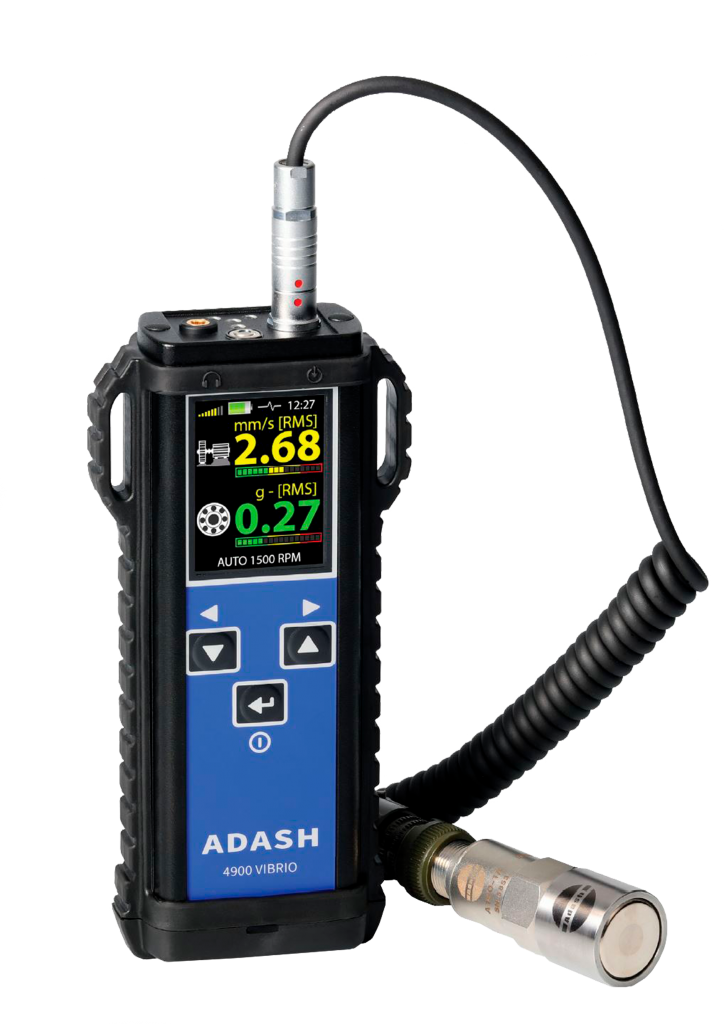
Vibrio M – Programmed measurements
ISO Overall values – RMS
- Measurements in velocity (mm/s) for the machine's general vibration level according to ISO 10816-3
- Acceleration measurements (g) for bearing noise
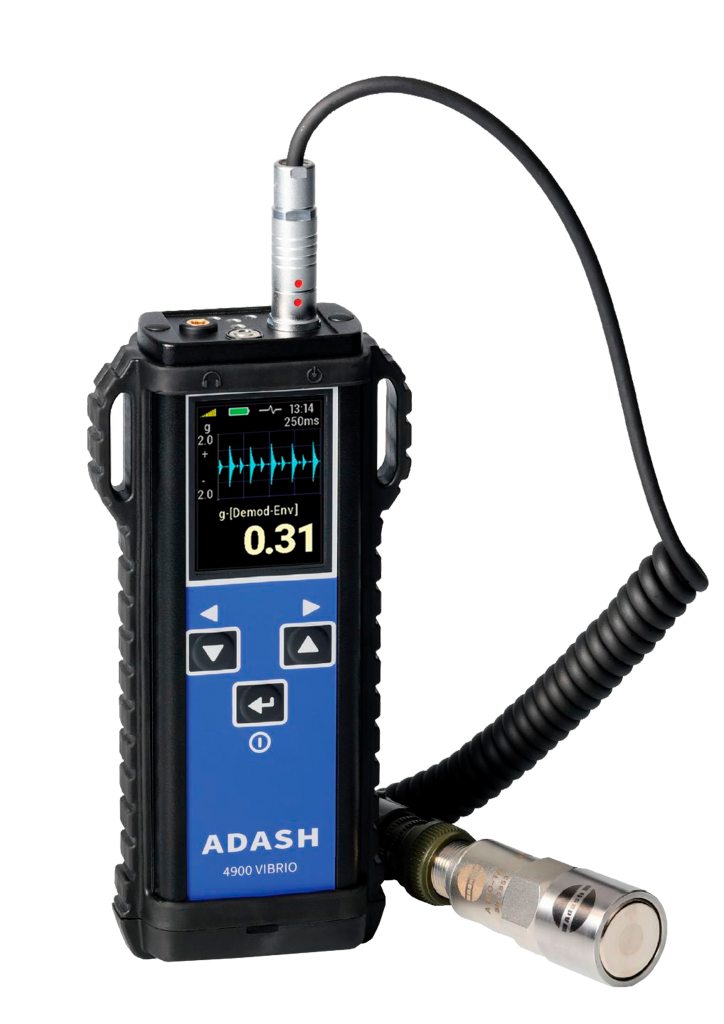
G-demo
- Special measurement technology to facilitate the detection of early bearing damage and hour waveform analysis
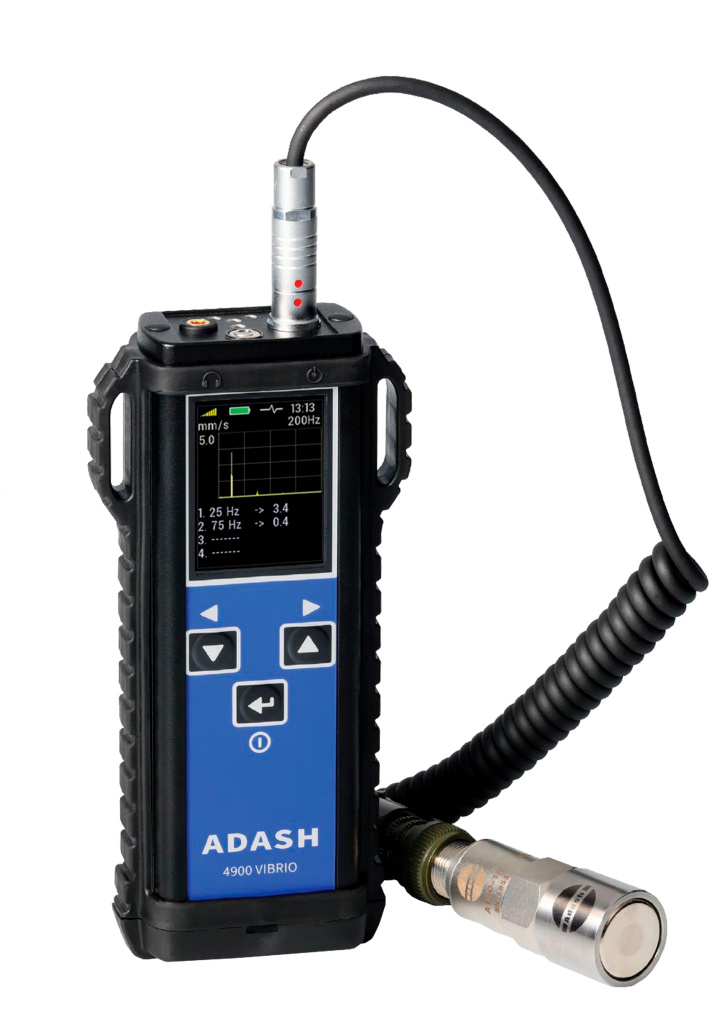
FFT – Spectrum
- To perform FFT analysis and identify which vibrations are highest and where they originate from
FASIT
- Automatic detection of imbalance, misalignment and bearing condition
……….And much more!
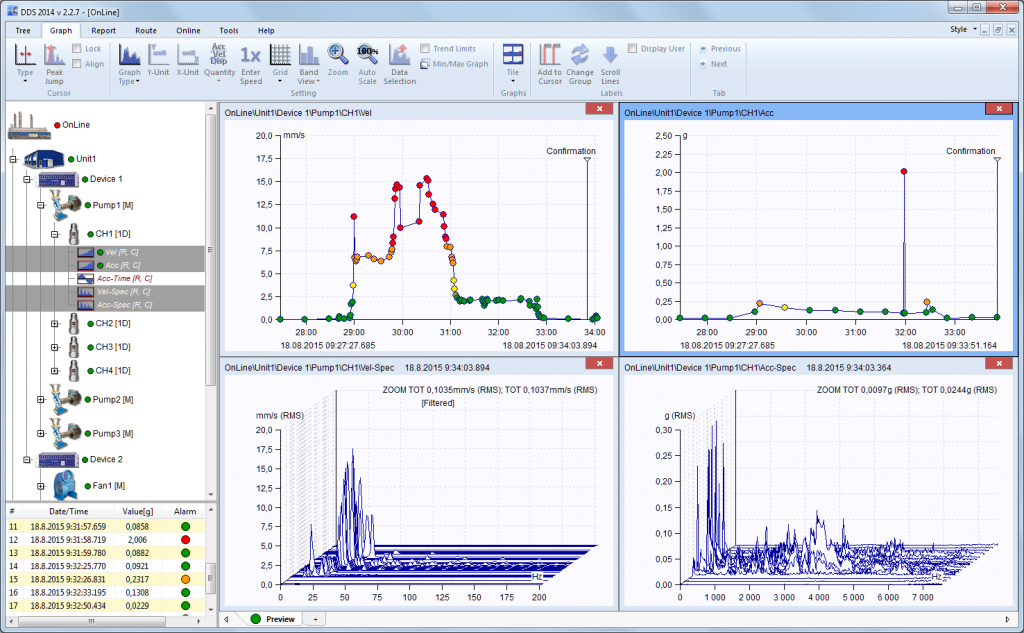
DDS analysis software
A4900 Vibrio comes with DDS (Digital Diagnostics System) - Adash software for storing and analysing vibration measurements.
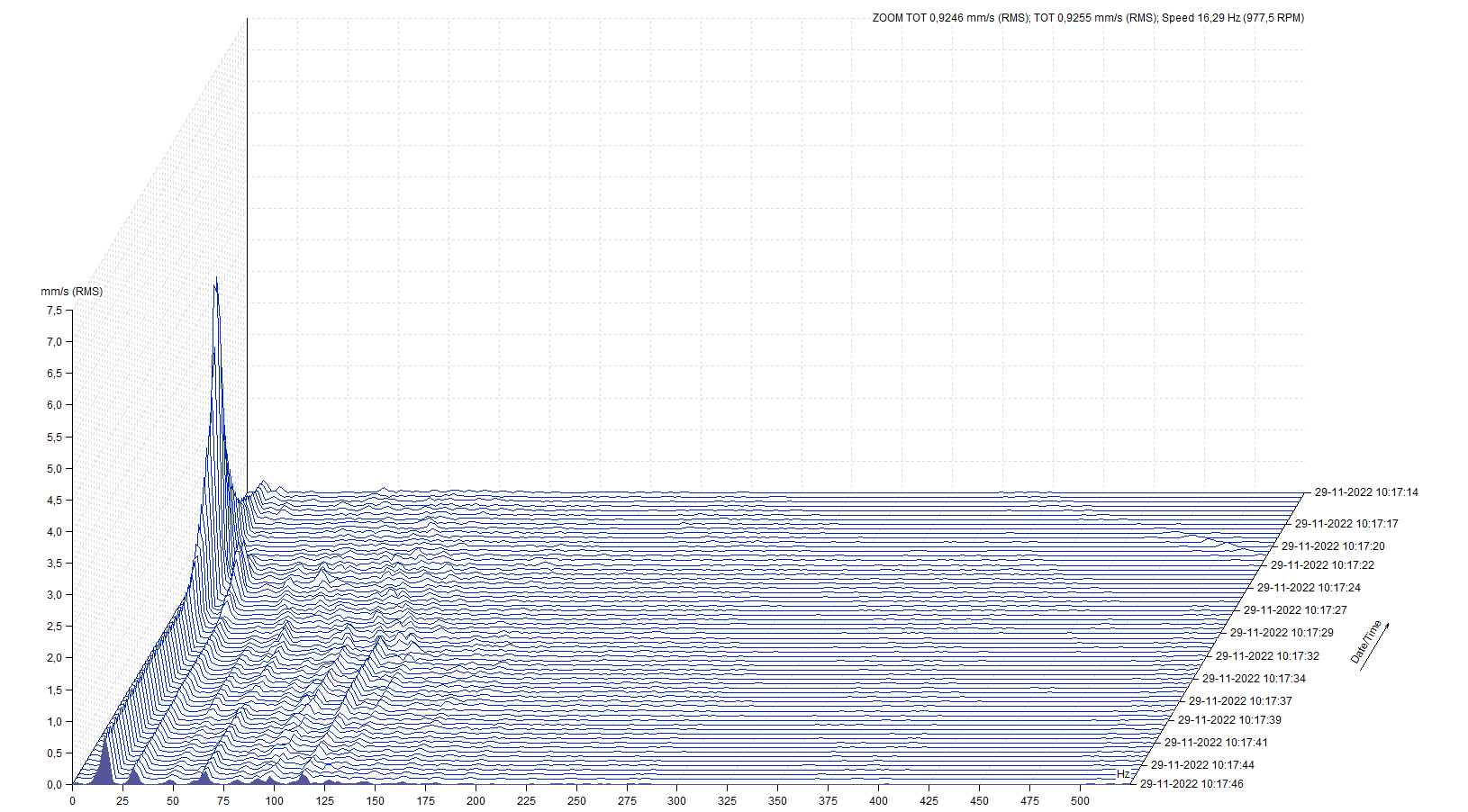
With DDS, measurements from the instrument can be transferred to a PC where data can be analysed and compared over time. The software allows you to, among other things:
- FFT spectrum analysis
- Time signal (time waveform)
- Trending of vibration levels
- Creating measurement routes and measurement points
- Identifying bearing and machine faults
DDS makes it possible to build a simple predictive maintenance programme, where changes in machine condition can be detected early.
A Free version of the software is included and can be used for both analysing and archiving measurement data from the A4900.
A4900 - Vibrio M - Video
Free software for vibration analysis
It is possible to download a free version of DDS, which is vibration analysis software. This software allows you to create a tree structure so that you can build a fixed measurement route and follow the route on the screen.
All trend values and vibration measurements are transferred to a PC via USB.
A4900-Vibrio
INPUT
1 X ICP supplied 100 mv/g accelerometer
INPUT RANGE
60 g PEAK with standard 100 mV/g sensor
Or 600 g PEAK with 10 mV/g sensor (sensitivity is adjustable in the instrument)
PROGRAMMED MEASUREMENTS
Velocity RMS: 10 - 1,000 Hz [mm/s, ips]
Velocity Peak: 10 - 1,000 Hz [mm/s, ips]
Acceleration RMS: 500 Hz - 16 000 Hz [g]
Acceleration Peak: 500 Hz - 16 000 Hz [g]
Velocity time: 1 - 1,000 Hz [mm/s, ips], 2048 samples
Velocity spectrum: 1 - 1 000 Hz [mm/s, ips], 800 lines
Acceleration time: 1 - 16 000 Hz [g], 2048 samples*
Acceleration spectrum: 1 - 16 000 Hz [g], 800 lines*
Acceleration Demod-Envelope RMS: 500 - 16 000 Hz [g]
Acceleration Demod-Envelope Peak: 500 - 16 000 Hz [g]*
Acceleration Demod-Envelope time: 500 - 16 000 Hz [g], 2048 samples
Acceleration Demod-Envelope spectrum: 500 - 16 000 Hz [g], 800 lines, range 400 Hz*
Displacement RMS: 2 - 100 Hz [µm, mil]
Displacement 0-Peak: 2 - 100 Hz [µm, mil]
Displacement Peak-Peak: 2 - 100 Hz [µm, mil]
IR TEMPERATURE MEASUREMENT
From -70˚C to +380˚C (-94˚F to +716˚F)
OTHER FEATURES
LED stroboscope (0.17-300 Hz, 10 - 18 000 RPM)
LED lamp
MEMORY
4 MB for data:
120960 overall values
or 900 measurements with 800 line spectrum
or 2048 sample time signals
SOFTWARE
Free version of DDS software (Limited database 200 MB)
TOLERABLE TEMPERATURE FOR INSTRUMENTS
-5°C to 55°C
DIMENSIONS
170 x 85 x 38 mm
WEIGHT
380 g (without cable, sensor and magnet)
590 g with cable, sensor and magnet