Balancing machines – part of your maintenance routine
Machines with imbalances in the system can reduce the service life of both the machine and important components in the system. The reasons for imbalances include increased weight and vibrations in the system. If there is an imbalance, the energy is dissipated as lost power and heat.
When performing balancing, you ensure that the vibrations in the machine are kept at an acceptable level. If there are too many vibrations, shafts, rotors, fan blades, etc. become overloaded, causing wear on the machine. By ensuring low vibrations, you increase the expected service life of the machine and its various important components.
The load on both bearings and stuffing boxes is reduced when balancing the rotating parts. Bearings, seals, shafts, stuffing boxes and similar components are quickly affected if there is too much vibration in the system. This causes significant wear on the system, which is why it is important to perform balancing at regular intervals to ensure that the machine is kept in balance.
How is balancing carried out?
Balancing should always be carried out during production stoppages. This allows the machine to be started and stopped during the procedure.
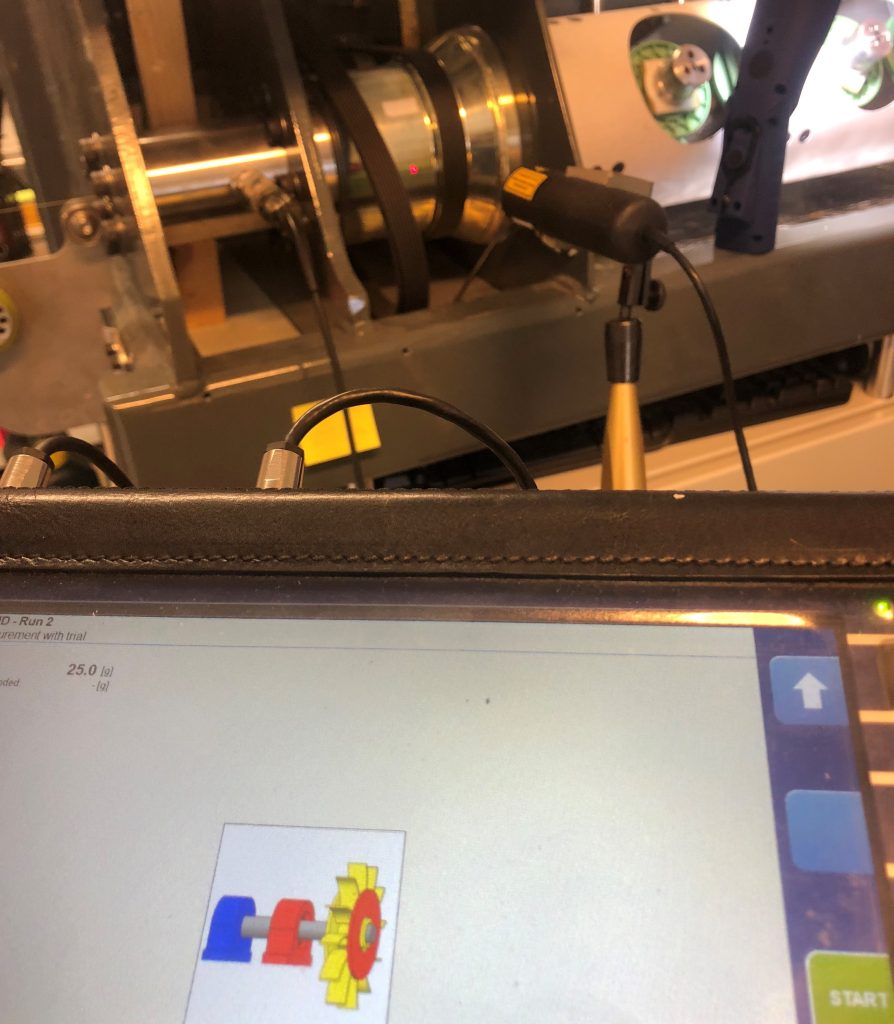
The balancing itself is performed by the entire system, not just the individual components of the machine. We do this to take into account the imbalance of the system as a whole. We bring the machine back into balance by cleaning, adding or removing weight after measuring it in a balancing device.
We perform balancing based on vibration measurements, which are carried out to monitor the condition of the machine. The vibration measurements show how the vibrations change over time, and when they reach a certain stage, it is time to balance the system.
Static and dynamic balancing
When balancing machines, a distinction is made between static and dynamic balancing. Typically, both types are performed on the machine to ensure that all components in a machine rotate vibration-free.
Static industrial balancing ensures that all points in, for example, a rotor have the same weight. Dynamic industrial balancing, on the other hand, ensures that the same weight appears on each side of the vertical centre line.
By performing both types of balancing, the machine is brought into balance because the same weight is applied to all parts of the machine. The centre of gravity is thus located on the axis of rotation, thereby reducing fluctuations in the form of vibrations.
Reason for imbalance in the system
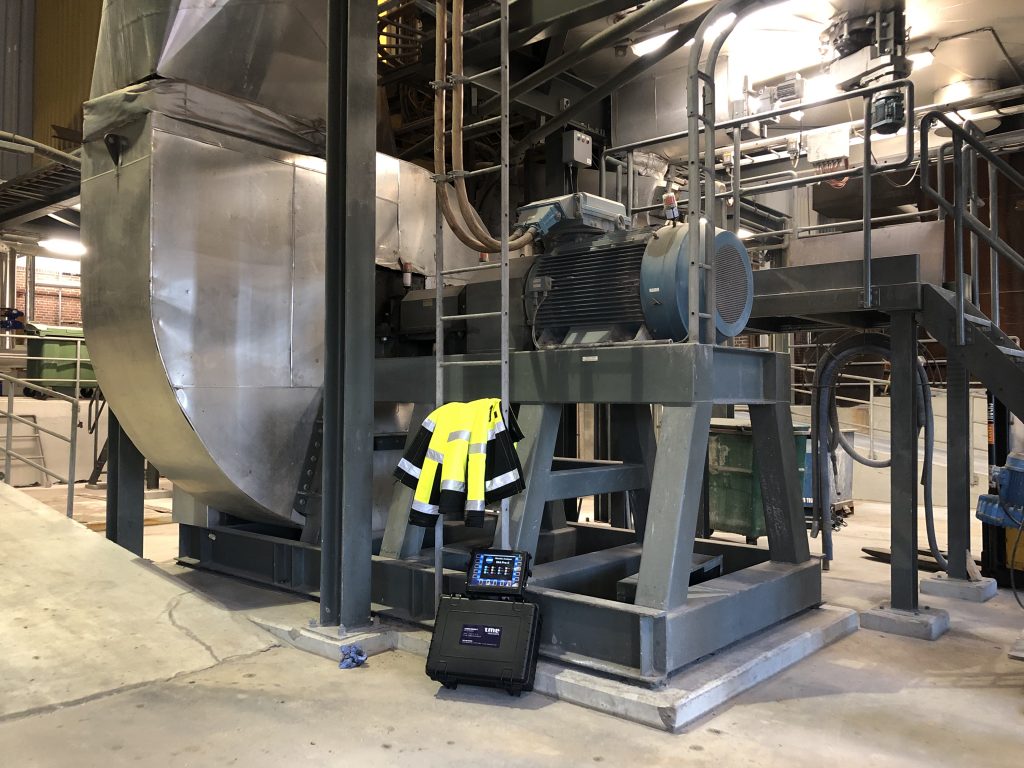
An imbalance in a machine occurs when the centre of gravity of a rotating machine part is not located on the axis of rotation. This means that there is a “heavy spot” in the system, which causes unnecessary vibrations.
The reasons for an imbalance in the system may include:
- Dirt
- Care and machining errors in connection with drilling out shafts
- Eccentric parts
- Wear on rotating parts
Documentation of the balancing
Once balancing has been completed, the quality is documented in a report, which is drawn up in accordance with various ISO standards as required.
The balancing report contains the results of the measurements, as well as how much weight has been removed or added. As standard, we also include a vector diagram and other documentation to make the report easy to understand.
The image shows a few excerpts from the images and sketches contained in a balancing report.