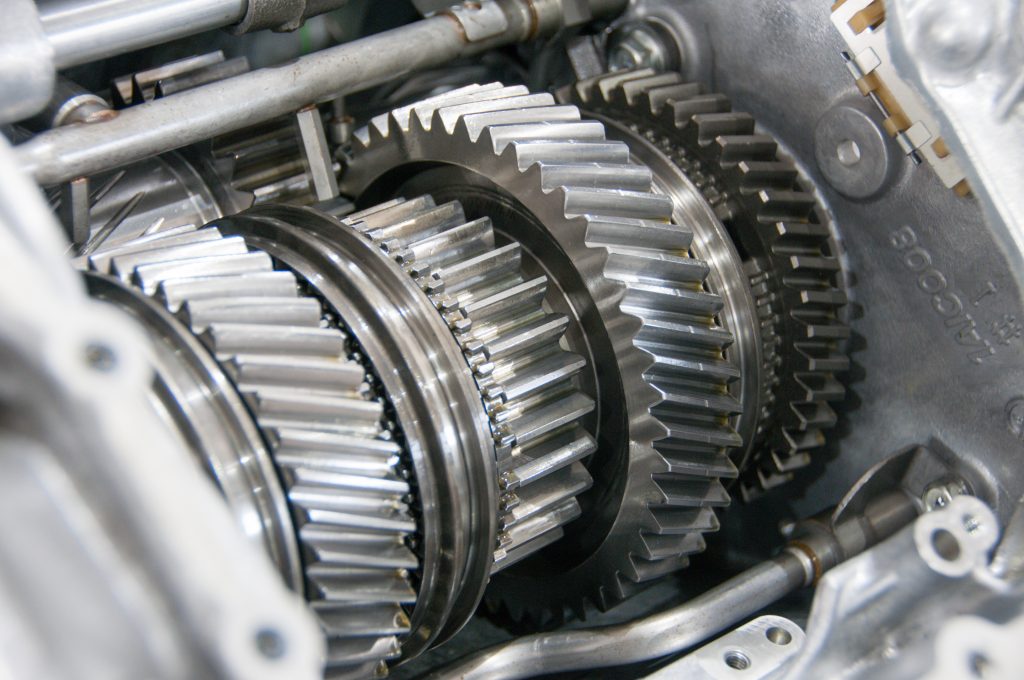


We perform vibration measurements on reduction gears and general gear applications, and we have extensive experience in the marine industry.
In addition to the marine industry, we also offer vibration analysis of gears for other industries.
Gearboxes are typically one of the most critical rotating components in factories and ships. Gears and gearboxes are also difficult to monitor and perform condition analysis on, and in most cases, several different measurement technologies and operating data are required to obtain reliable data for condition assessment. These may include: oil analysis, temperature, alignment and vibrations.
There can be various reasons why gearboxes break down, including:
We have our own PLC. Can we connect the equipment to our PLC so that we avoid having multiple systems for data collection?
With an HS530 module, it is possible to send two electrical signals to a PLC, in this case 0-10V. The electrical signal is converted and filtered so that it is proportional to the vibrations. The two signals are:
1. Signal proportional to RMS velocity (10-1000Hz) – For alignment and imbalance detection
2. Signal proportional to Envelope acceleration (500-5000Hz) – For bearing faults
There is also a BNC output signal, which allows you to connect one of our handheld measuring instruments if you want to perform more advanced vibration measurement and analysis.
*The HS530 module requires 24 V DC.
Here is an example of a measurement taken on a gearbox, with a shaft generator connected to an output on a ship.
The frequency of dental interventions = 750 (12.5 Hz) x 69 = approx. 862.5 Hz
The tooth engagement frequency, input frequency (speed) and output frequency (speed) provide information about the tooth engagement on the gear (from a purely technical point of view, the hour waveform should also be examined).
In addition to seeing tooth engagement frequency, broken and worn teeth on the gear, we can also identify bearing faults when we know the bearing type inside the gear, as these fault frequencies from a bearing fault will also be visible in the FFT spectrum shown in the image.
It is also possible to identify alignment errors between the components connected to the gearbox.